
How to plan a facility members actually want to use
Designing a commercial gym is not just about selecting equipment and filling a room. The best facilities balance member experience, equipment density, workout flow, durability, visual identity, and long-term flexibility.
A strong commercial gym layout feels intuitive. Members should be able to move through a workout naturally without waiting excessively for key equipment or crossing the entire facility every time they change exercises.
The most successful gyms are not always the largest. They are the ones where the equipment mix feels complete, the layout makes sense, and the space still feels comfortable during peak hours.
A commercial gym does not need to have everything. It needs to have the right things, in the right quantities, in the right places.
What are you actually building?
Commercial gyms and boutique gyms can overlap, but they are usually planned around different operating models.
- A boutique gym is often built around a specific class format, coaching model, or niche training experience.
- A commercial gym is usually built to serve a broader membership base with different goals, schedules, experience levels, and training preferences.
This changes the layout strategy. A boutique gym can often commit to one very specific training identity. A commercial gym usually needs to cover the fundamentals exceptionally well before adding specialty pieces.
Before choosing equipment, define the positioning of the facility: budget-friendly, premium, bodybuilding-focused, performance-oriented, luxury wellness, 24/7 access, or full-service health club. That positioning should influence every planning decision that follows.
Start with the member experience, not the equipment list.
This is the most important planning principle for commercial gyms. Equipment matters, but the way members experience the room matters just as much.
Members usually judge a gym by a few practical questions —
Can I find what I need quickly?
Are the popular machines always taken?
Is there enough room to train comfortably?
Does the space feel clean, organized, and professional?
Does the equipment match the type of training I came here to do?
A commercial gym that looks impressive on an equipment list can still feel frustrating if the layout is confusing, the benches are always occupied, the cable stations are too few, or the free weight area is cramped.
The goal is not to maximize the number of pieces in the building but to create a gym that feels complete, easy to use, and worth coming back to.
How big should a commercial gym be?
Commercial gyms vary widely depending on positioning, market, rent structure, and target membership base. A small commercial gym may be only a few thousand square feet, while a full-service facility can easily exceed 20,000 square feet.
| Gym Type | Typical Size |
|---|---|
| Compact commercial gym | 2,500 – 5,000 sq ft |
| Mid-size commercial gym | 5,000 – 10,000 sq ft |
| Large commercial gym | 10,000 – 25,000+ sq ft |
Commercial gyms usually begin around 2,500 sq ft. At this size, the facility can cover the major training categories, but it still needs focus. Trying to serve every possible training style too early can make the gym feel crowded and incomplete at the same time.
Larger facilities have more flexibility. More space allows for better zoning, more equipment duplication, broader machine selection, larger free-weight areas, and more specialized zones.
The important point is that square footage alone does not determine quality. A 5,000 sq ft gym with smart zoning can feel more professional than a 10,000 sq ft gym with poor circulation and no clear logic.
What you’re actually designing for.
Gyms are rarely used evenly throughout the day. Most commercial facilities are really designed around their busiest windows.
Peak usage typically happens during —
weekday mornings
weekday evenings
weekends late morning
As a rough planning assumption, peak occupancy often represents 10–20% of total members. The exact number depends on the business model, access hours, class schedule, location, and member demographics.
Members will usually tolerate occasional waiting. What hurts perceived value is consistent congestion around the same pieces of equipment every time they train.
This is why peak usage should influence the equipment mix. Once the fundamentals are covered, duplicating popular equipment often improves the experience more than adding another niche machine.
How the space is actually being used.
Most commercial gyms are organized into training zones that reflect how people actually use the facility. Clear zoning makes the gym easier to navigate and helps the room feel organized, even during busy hours.
Strength equipment usually occupies the largest portion of a commercial gym because most members expect a complete range of resistance training options.
Cardio matters as well, especially for general population gyms, but the required amount depends heavily on demographics and positioning. A bodybuilding-focused gym may need less cardio. A mainstream membership gym may need more.
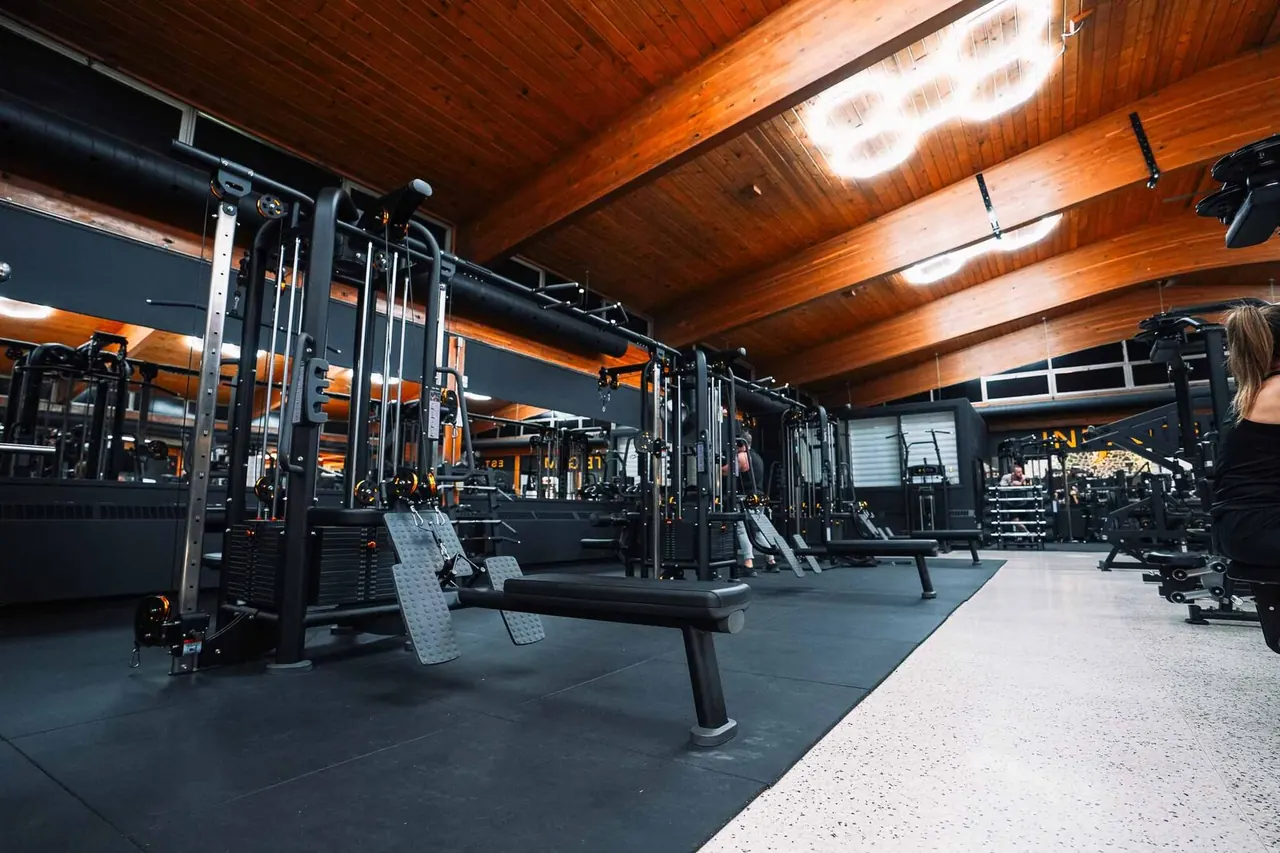
Apte Fitness is a strong example of a premium commercial facility where the zones feel natural and intuitive instead of forced.

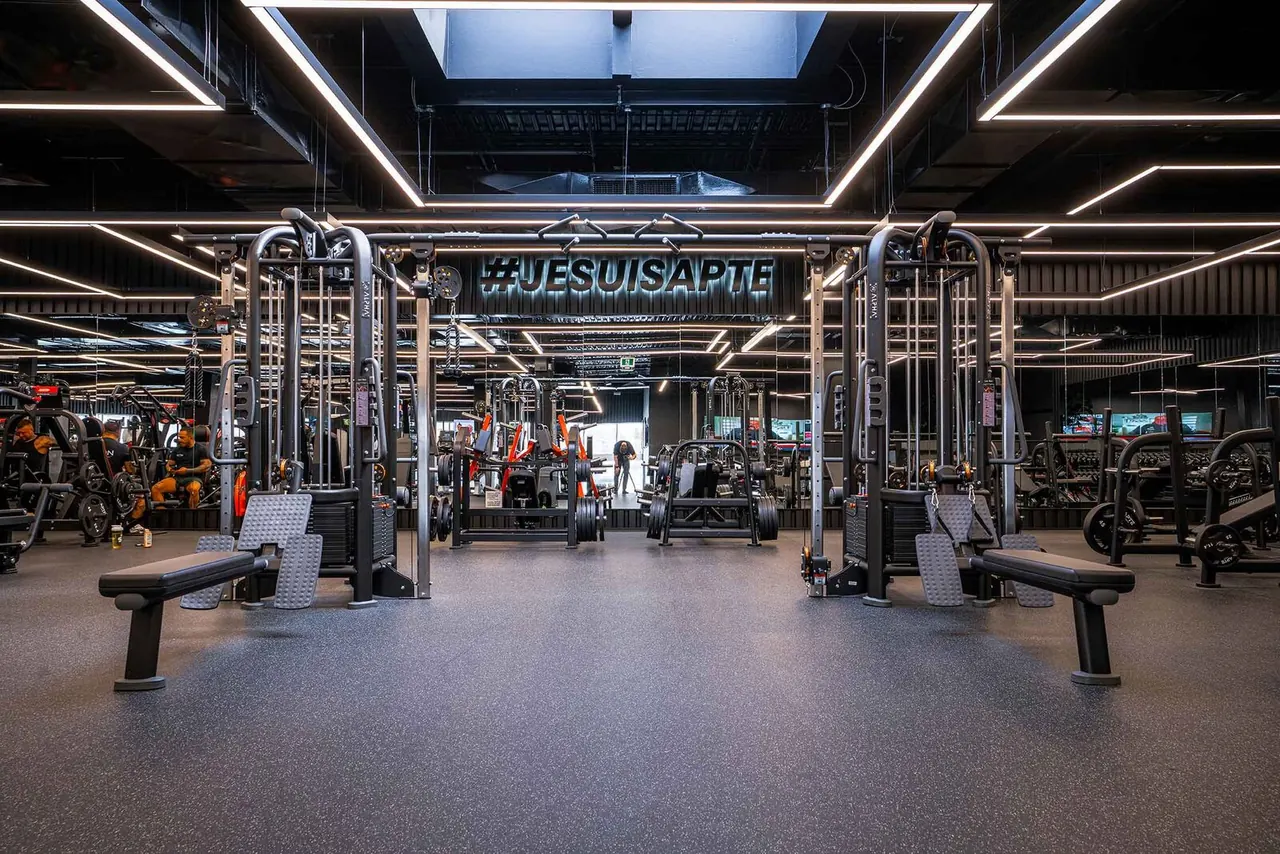

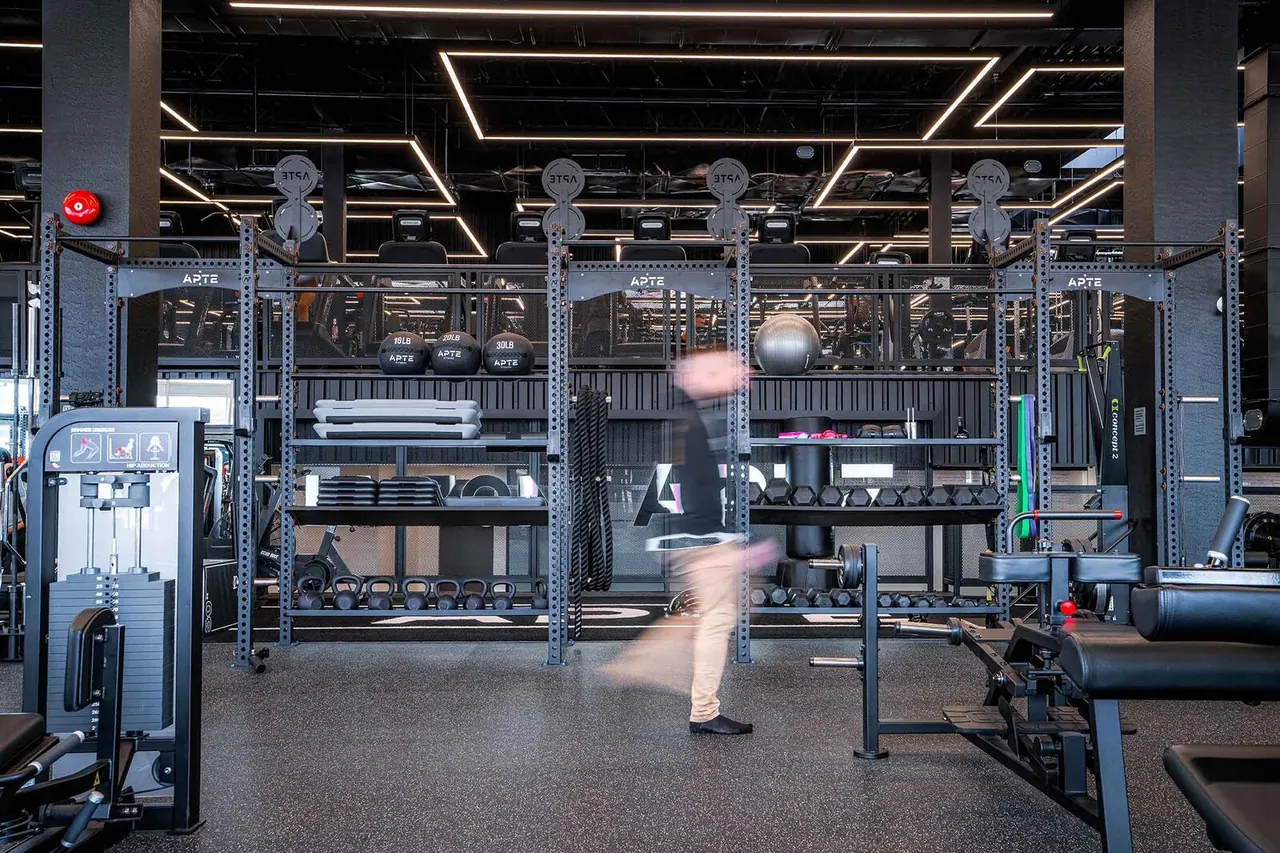
Cover the basics, before chasing novelty.
A commercial gym should cover the basics before chasing novelty. Members may enjoy specialty equipment, but the highest-value pieces are usually the ones used every day by the largest number of people.
Core equipment categories often include
- selectorized strength machines
- plate-loaded strength machines
- cable stations and functional trainers
- leg machines
- squat racks, half racks, or power racks
- smith machines
- adjustable benches
- dumbbells, barbells, plates, and storage
- cardio equipment
- functional training accessories
The most-used equipment in almost every commercial gym tends to include leg presses, leg extensions, leg curls, cable stations, benches, squat racks, and smith machines.
Once these foundations are covered, specialty pieces can create differentiation. But they should be added after the facility has already solved the most common member needs.
A useful planning heuristic for commercial gyms is approximately 100 sq ft per major equipment piece, including circulation. This average can include cardio machines, selectorized machines, plate-loaded machines, racks, benches, and cable systems.
| Gym Size | Approximate Equipment Count |
|---|---|
| 2,500 sq ft | 20 – 30 pieces |
| 5,000 sq ft | 40 – 60 pieces |
| 10,000 sq ft | 80 – 120 pieces |
| 20,000 sq ft | 180 – 240 pieces |
Higher density is possible, especially in machine-heavy gyms, but overly tight layouts usually affect comfort, safety, and perceived quality.
Once the facility is large enough, duplicating high-demand equipment often improves member experience more than simply adding more variety. Two cable areas, multiple benches, more than one leg press, or several smith machines can reduce bottlenecks during peak hours.
How members actually move.
A strong commercial gym layout mirrors the natural flow of a workout. Most members follow a simple sequence, and layouts that support this sequence tend to feel more intuitive.
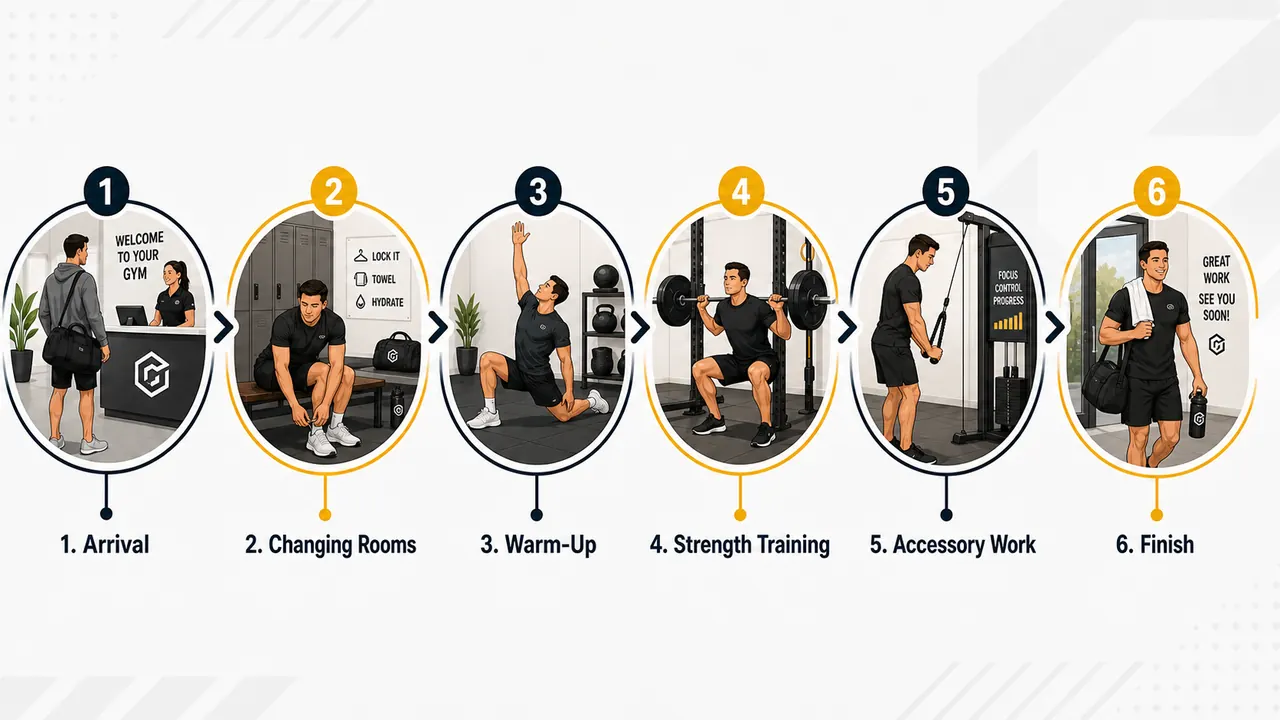
Grouping equipment by muscle group helps members move efficiently through their workouts. It also makes the gym easier to understand for newer members.
Highly versatile equipment such as cable machines and smith machines are often positioned centrally or duplicated across zones. Quebec-based gym chain Maxi-Forme used a smart version of this strategy by placing an 8-stack jungle at one end of the gym and functional trainers at the other — members did not need to cross the entire facility to access cables.
Dumbbells also deserve a clearly defined area. They are one of the most important zones in the facility and tend to generate congestion if they are squeezed into leftover space.
Functional training continues to grow in popularity and benefits from a dedicated area that keeps accessories organized and contained.
Cardio equipment often works best near windows when possible. Natural light improves perceived quality and makes the space feel more inviting.
For a deeper breakdown of gym layouts, review our free gym layout guide.
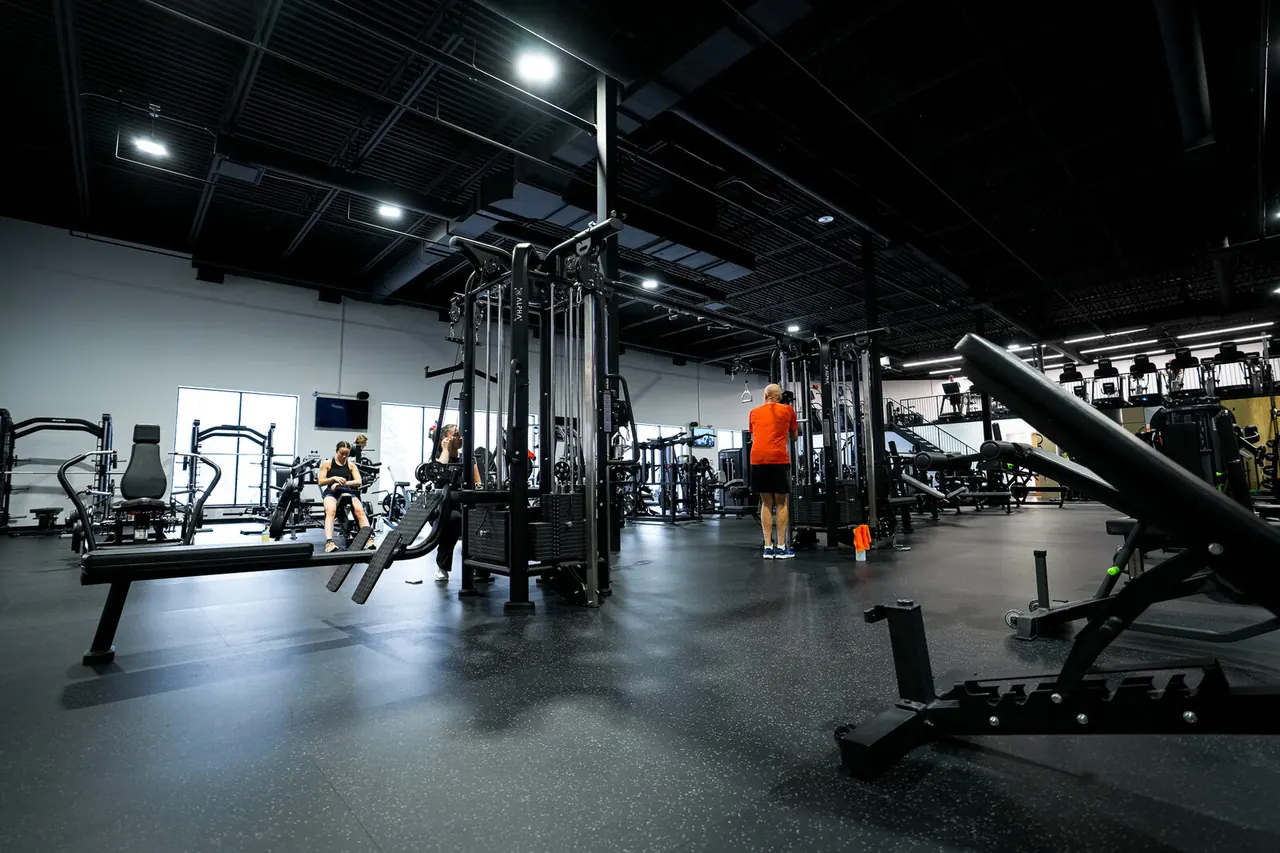
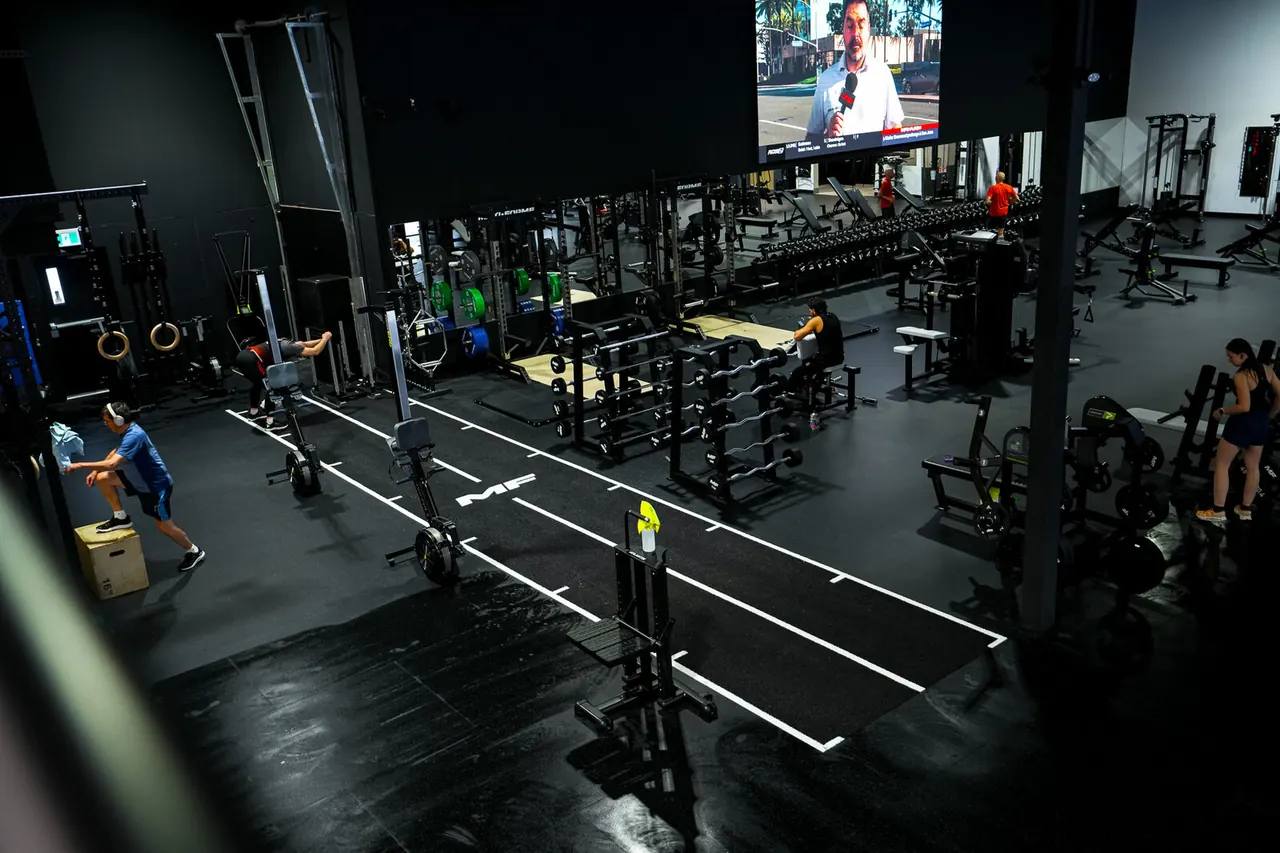
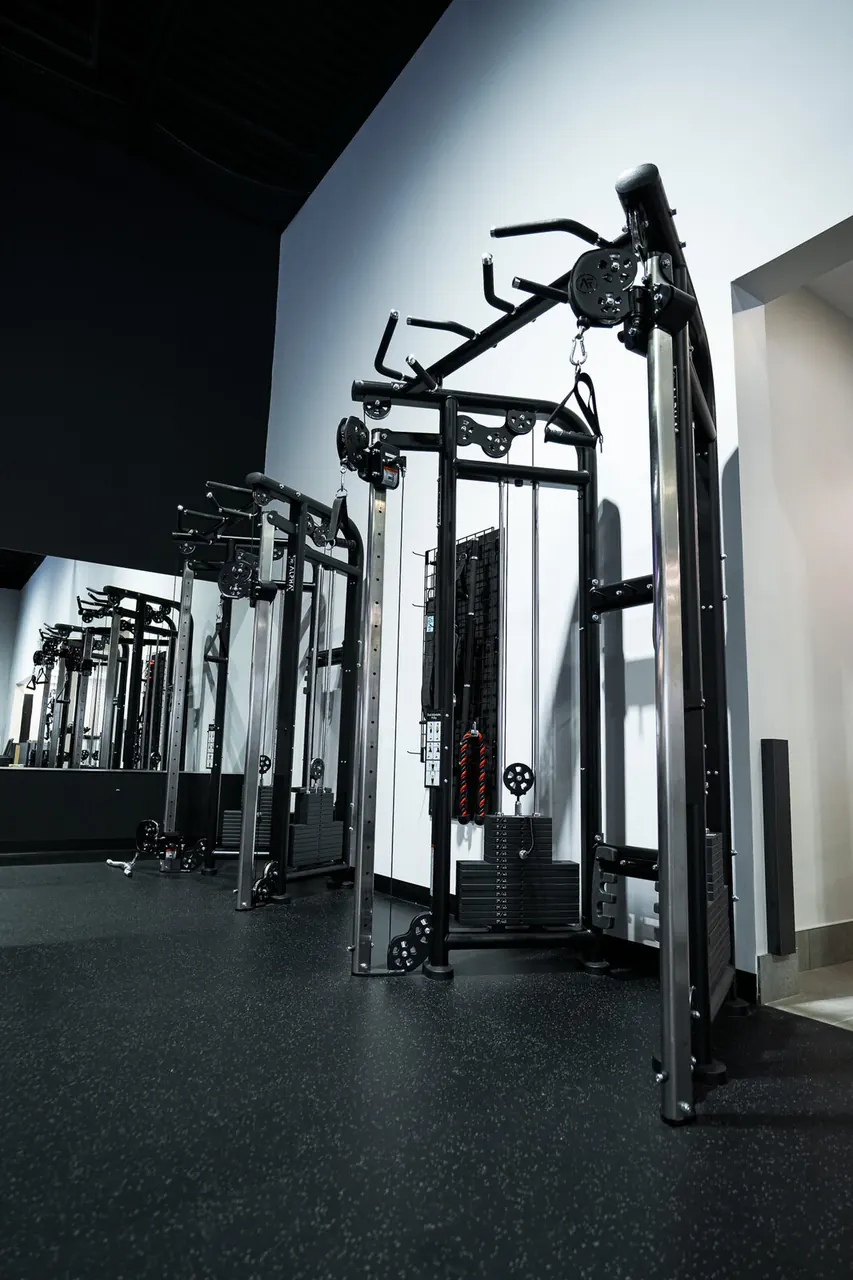
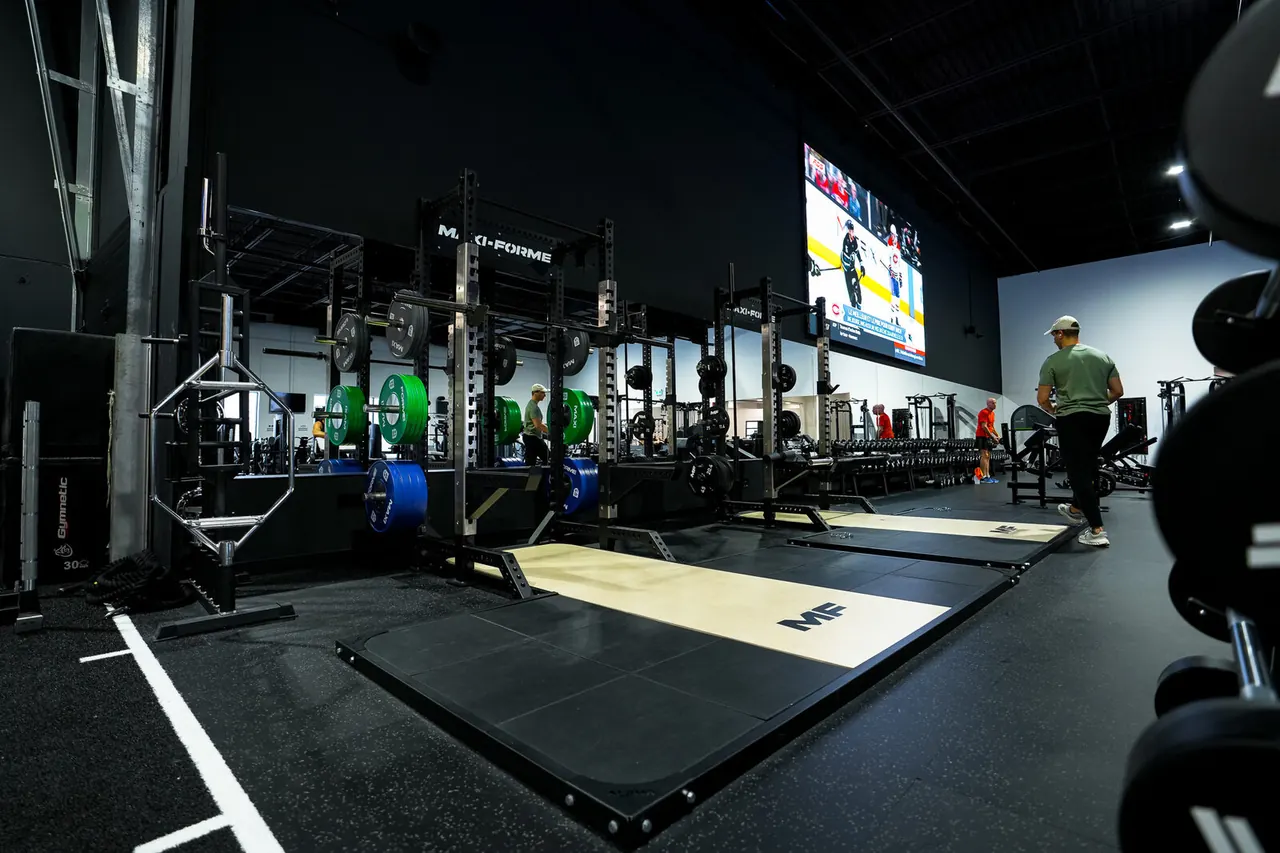
Higher ceilings improve the perception of openness and airflow.
Technical planning is easy to underestimate early in the process, but it has a major impact on the final experience.
Ceiling height
- 9 ft minimum
- 10–14 ft ideal
- 14 ft+ adds to the perception of an airy, open room
Higher ceilings also improve lighting quality and comfort during overhead movements.
Electrical
Electrical planning should happen early, especially in cardio-heavy facilities. Most commercial cardio units run on 120V, but many require dedicated 20A circuits. Connected equipment may also require reliable internet access.
HVAC
HVAC matters more than many owners expect. Gyms generate heat quickly, especially during peak hours. Poor ventilation is one of the fastest ways to make an otherwise premium facility feel uncomfortable.
Match the floor to the zone.
Flooring affects durability, acoustics, equipment protection, and training comfort. The right solution depends on the training zone.
| Zone | Common Recommendation |
|---|---|
| General training areas | 8 mm rubber |
| Free weight areas | 30 mm anti-vibration tiles recommended; 8 mm may work in lighter-use zones |
| Heavy lifting zones | 30 mm anti-vibration tiles or lifting platforms |
| Functional zones | Turf, rubber, or a combination of both |
Thicker flooring is typically used where impact forces are higher, especially around free weights, racks, Olympic lifting, and heavy plate-loaded equipment.
Flooring is also a branding opportunity. Custom turf, inlaid logos, and coordinated colors can make a large room feel more distinctive without reducing functionality.
Equipment investment varies depending on positioning, size, customization, cardio selection, flooring, and density.
Cost is usually driven by
- quantity of equipment
- quality level
- amount of cardio
- customization
- flooring requirements
- layout density
- delivery and installation complexity
Higher-end gyms often allocate more budget toward visual identity, premium finishes, and custom equipment details. Cardio equipment can represent a large portion of the investment because individual units are expensive, especially when advanced console technology is included.
Strength equipment usually has a longer lifespan and more consistent usage patterns, which is why the strength layout deserves careful planning.
We built a Gym Cost Estimator Tool to help gym owners estimate their project budget based on square footage and planning assumptions.
Estimate your project in seconds.
Drag the slider, pick your facility type, and see a live budget range built from real Alpha Fitness project data.
Professionalism is the basics, done excellently.
A useful way to think about commercial gym design is this: professionalism is the basics done excellently.
Members usually care about
- enough benches
- enough cables
- enough leg machines
- clear layout
- room to move
- not waiting too long for popular equipment
- equipment that feels durable, smooth, and commercial-grade
Members usually care less about
- having every niche machine
- excessive variation of the same movement
- equipment they do not understand
- a crowded room that looks complete on paper but feels frustrating in real life
A gym that “has everything” but feels cramped often performs worse than a gym that is easy to use, well organized, and built around the equipment members actually use most.
Leave room for the gym you don’t know yet.
One of the most common mistakes in commercial gym planning is assuming the gym must launch fully complete.
Leaving 10–15% of the space or budget for future expansion can lead to better long-term decisions. A second equipment phase 12 months after opening allows real member behavior to guide the next investment.
Benefits of phased expansion include
- observing real usage patterns
- identifying bottlenecks
- duplicating high-demand equipment
- refining the layout
- reducing initial capital strain
Common second-phase additions include leg presses, leg extensions, leg curls, cable stations, benches, and specialty pieces that members consistently request.
Real-world usage almost always differs slightly from projections. A phased approach allows the facility to evolve based on demand instead of assumptions.
Equipment selection alone rarely creates a memorable commercial gym.
The physical environment shapes how members perceive value, professionalism, and community.
Customization can help create
- stronger brand recognition
- higher perceived value
- a more memorable member experience
- stronger community attachment
- a more shareable space for social media
Customization can include
- brand colors on equipment frames
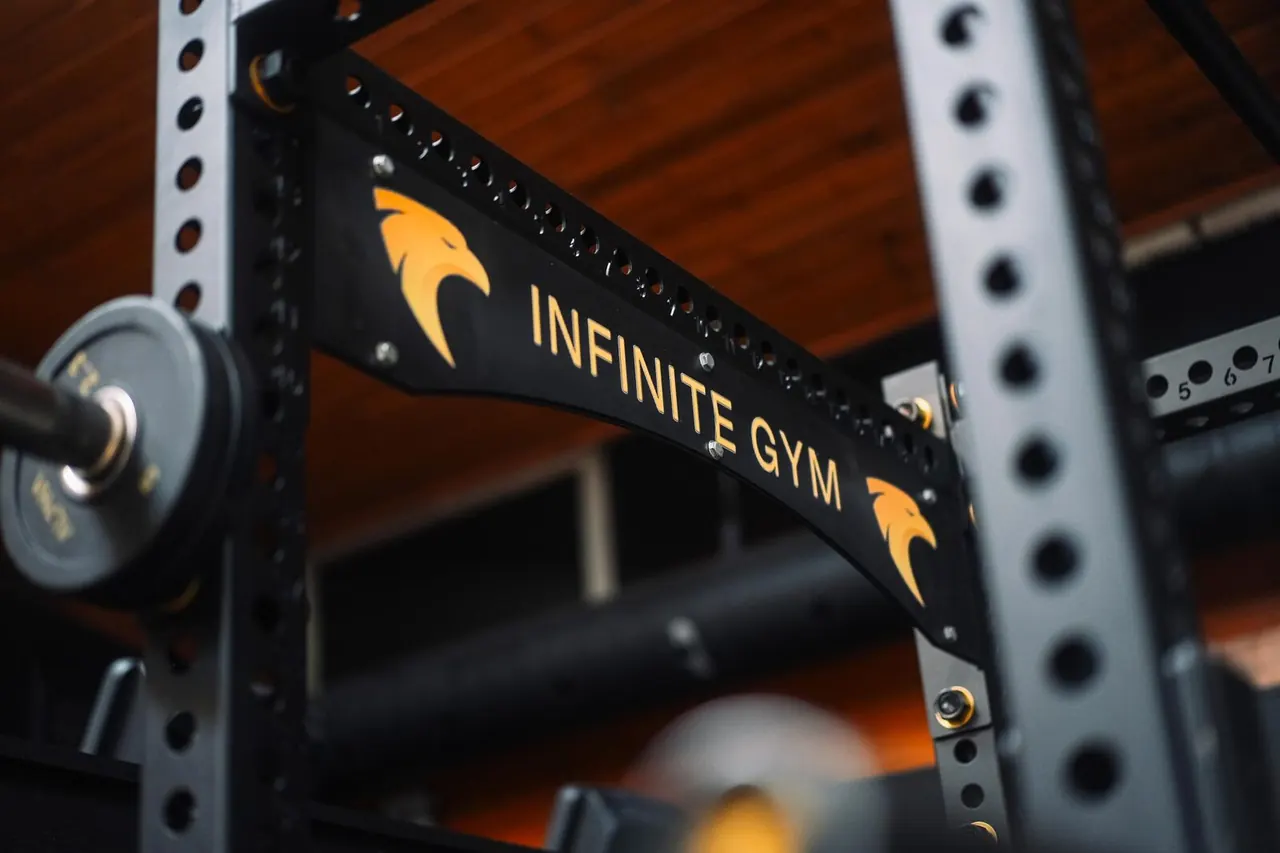
- logos on machines, racks, benches, or upholstery
- custom dumbbells and plates
- branded rigs
- custom turf
- coordinated materials and finishes
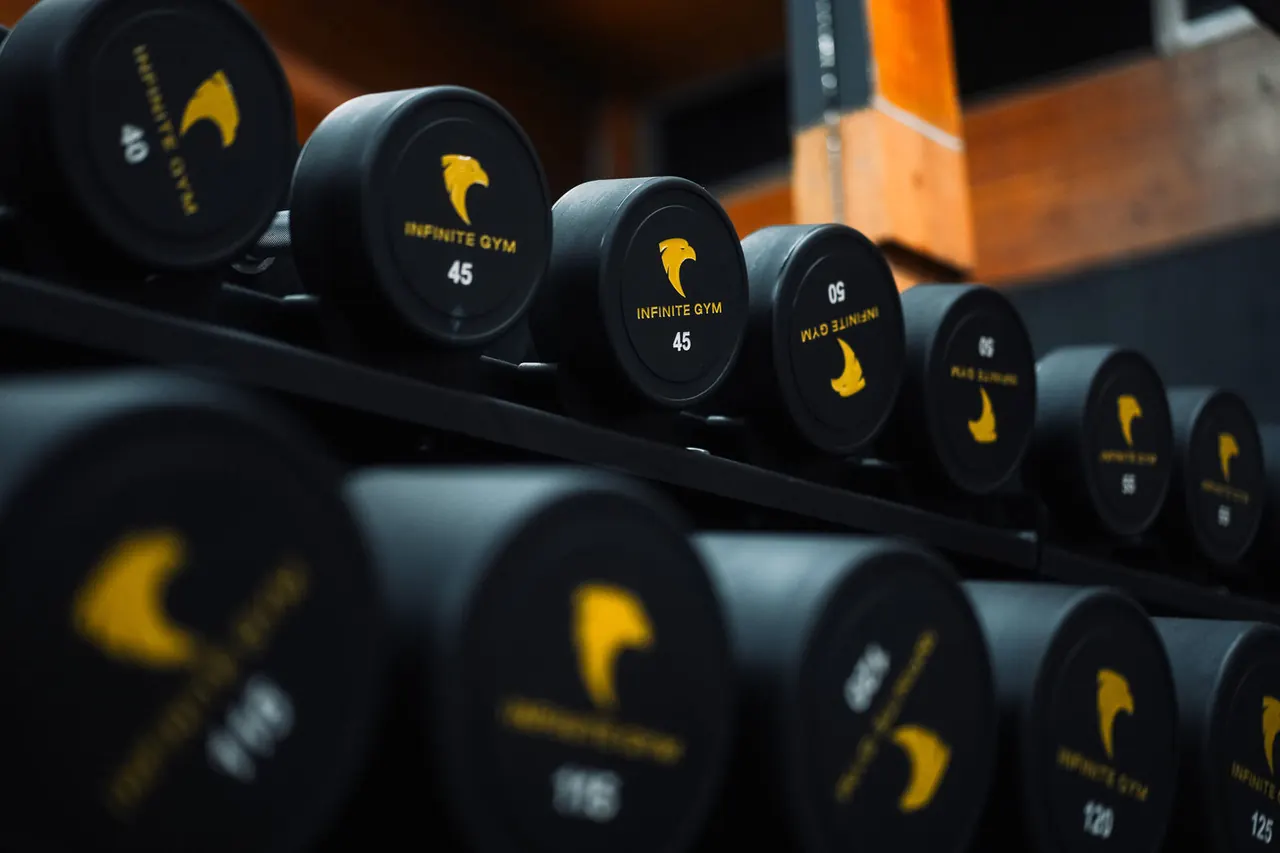
Members often associate the physical environment with the quality of the gym. At Infinite Gym, the owners shared a simple example:
Someone came in for a trial, saw the wall of branded dumbbells, and signed up for a 12-month membership before even completing the trial.

The expensive mistakes show up early.
- Overcrowding the layoutTrying to maximize equipment count often reduces perceived quality.
- Ignoring circulation spaceComfortable spacing improves safety, flow, and member experience.
- Over-investing in rarely used equipmentEquipment mix should reflect actual training habits, not just novelty.
- Underestimating peak usageBusy-hour experience has a direct impact on member satisfaction and retention.
- Ignoring future expansionA phased strategy allows better investment decisions after real usage patterns emerge.
- Choosing residential-grade equipmentCommercial gyms require equipment built for consistent heavy use.
- Leaving storage as an afterthoughtPoor storage makes large spaces feel messy and smaller spaces feel chaotic.
Start earlier than you think.
Finding the right space often takes longer than expected. Lease negotiations, financing approvals, architectural drawings, permits, renovations, and electrical work can all affect the final timeline.
Equipment fabrication timelines typically range from 12 to 20 weeks depending on customization level, product mix, and project complexity.
Starting the planning process early gives the owner more layout flexibility and reduces last-minute compromises. It also gives enough time to coordinate flooring, electrical, delivery access, and installation sequencing.
Open with momentum.
Opening a commercial gym is a major project. A strong launch can create momentum before the facility has even built a large member base.
A grand opening event can help generate local awareness, social media content, referral opportunities, and early community buy-in. The cost is usually small compared with the exposure and credibility it can create.
For many gyms, the opening event is not just a party but rather the first real marketing campaign for the physical space.
Different sizes, same principles.
The exact layout will always depend on positioning, but these scenarios show how planning priorities change as square footage increases.
2,500sq ft
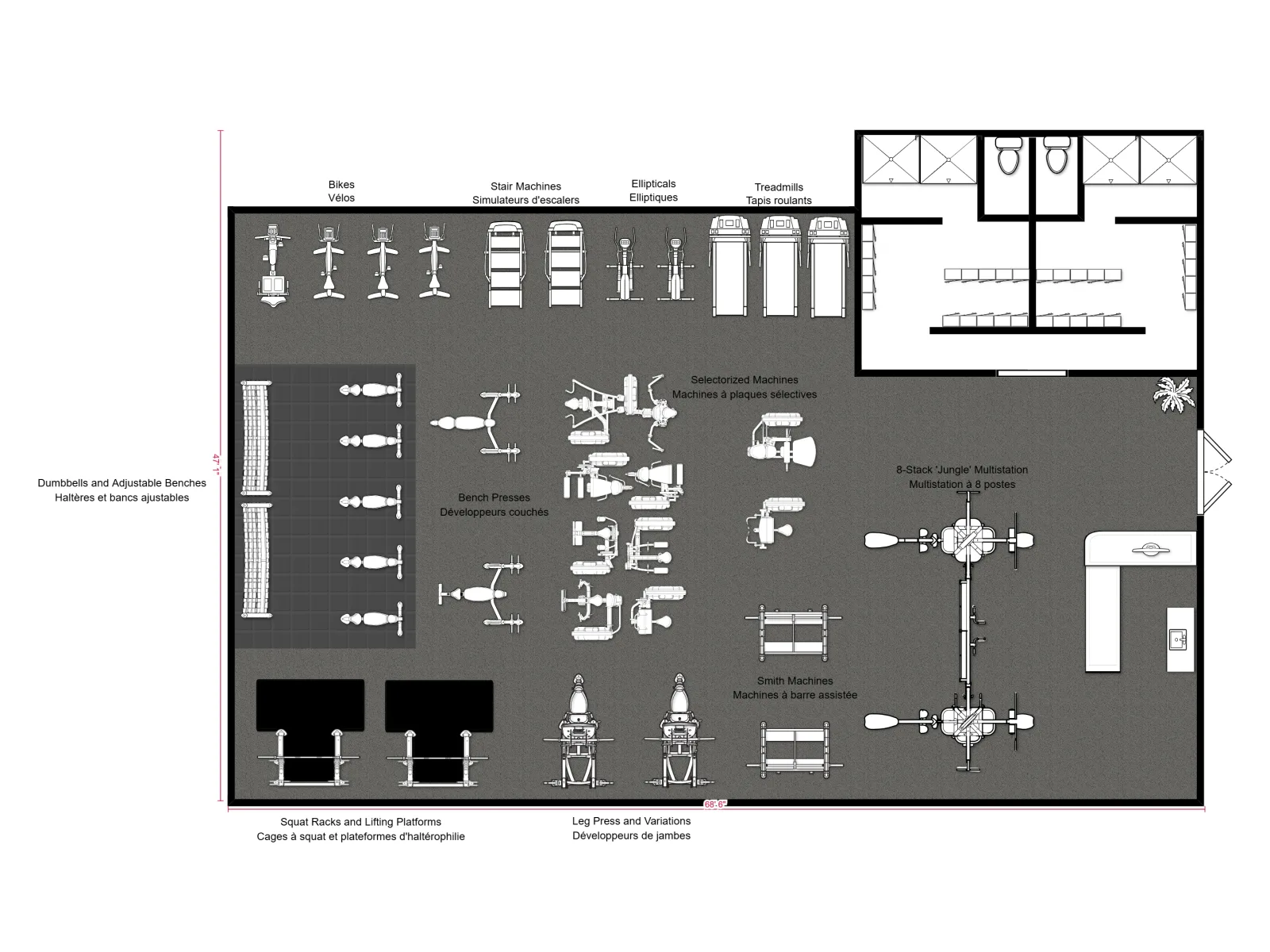
A well-designed 2,500 sq ft gym can cover most training needs while staying organized and efficient. At this size, the owner should be selective. The gym needs to feel complete, but not overloaded.
Common priorities include:
- cardio placed along a wall or near windows
- free weights grouped together
- strength machines covering major movement patterns
- one or two visually impactful pieces, such as a custom rig or multi-station
- careful duplication of high-demand pieces such as smith machines or leg presses
Two smith machines often see consistent usage. Two leg presses, or a combination of leg press and hack squat, is also common in gyms of this size if the positioning supports it.
10,000sq ft
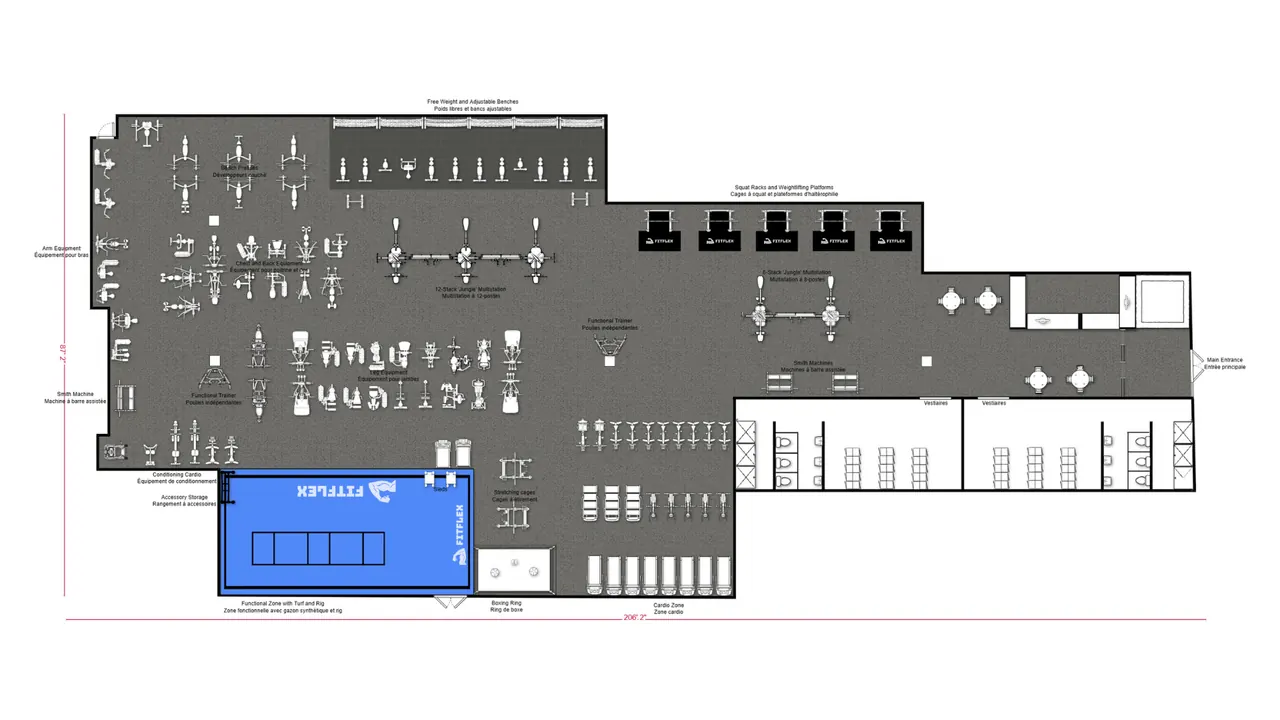
Larger facilities allow clearer zoning and greater duplication of popular equipment. The layout can follow the natural training flow more completely: entry, changing rooms, warm-up, main strength training, functional work, and accessory areas.
At this size, the planning focus shifts from simply fitting equipment to managing movement across the facility.
- strength machines grouped by muscle group
- free weights with a dedicated zone and enough benches and circulation space
- cable machines and smith machines duplicated in different areas
- a secondary dumbbell or accessory area near functional training zones
- specialty machines added without sacrificing the fundamentals
A simplified sequence for planning a commercial gym.
Each step reduces uncertainty later in the project. The earlier the layout is reviewed, the easier it is to avoid expensive compromises.
- Define positioning and target demographic
- Estimate space requirements
- Estimate peak usage
- Define training zones
- Build the initial equipment list
- Develop the layout
- Plan electrical, HVAC, and internet requirements
- Select flooring by zone
- Define customization and brand identity direction
- Plan fabrication, delivery, installation, and future expansion


